Northern Virginia Real Estate and Community News

May 13, 2020

5 Step Strategy for Downsizing Your Home


5 Step Strategy for Downsizing Your Home

In our “bigger is better” culture, there’s an expectation that each home should be larger and grander than the last. But life changes like divorce, kids leaving for college, or even the simple act of growing older can prompt us to find a smaller home that better suits our shifting needs and lifestyle.

In fact, the advantages of downsizing are being increasingly recognized. A “tiny house movement” has gained passionate advocates who appreciate the benefits of living simply at any age and stage of life. Not only does a smaller home typically cost less, it also takes less time and effort to maintain.1

Whatever your reasons are for downsizing, the process can seem overwhelming. That’s why we’ve outlined five steps to guide you on your journey. And in the end, we hope you’ll find that less is more … more comfort, more security, and more time and energy to spend on the activities and the people that you love.

5 STEPS TO DOWNSIZING SUCCESS

  1. Determine Your Goals and Limitations

The first step is to figure out your goals for your new living environment. Do you want to live closer to family? Are you hoping to cut down on home maintenance? Are you looking for a community with certain amenities?

You should also consider any limitations that will impact the home you choose. For example, are stairs an issue? Do you need access to medical care? In the case of divorce, are there child-custody issues you need to take into account?

Estimate how long you plan to stay in your new home. Do you expect your needs to change during that time?

Make a “wish list” of features and prioritize them from most to least important. If you’d like any assistance with this process, give us a call! We’d be happy to sit down with you for a free consultation. We can also help you assess the value of your current home so you can set a realistic budget for your new one.

  1. Find the Perfect New Home

Once you’ve established your “wish list,” we can begin the search for your new home. As local market experts, we know the ins and outs of all the top communities in our area. We can help you determine the neighborhood and type of home that will best fit your wants and needs.

From family neighborhoods to retirement communities, we serve clients in all stages of life. If you or a loved one are in need of extended support, we can also share our knowledge of the assisted living facilities in town and help you identify those that offer the optimal level of care.

Are you planning to relocate out of town? We can refer you to a trusted real estate professional in your target area who can help you with your search.

  1. Sell Your Current Home

If you’re ready to sell your current home, we’ll begin the process of preparing to list it as we search for your new one.

We have a special interest in helping homeowners who are facing major life transitions, and we offer a full-service real estate experience that aims to remove as much of the stress and hassle of selling your home as possible. We also understand that many of our clients choose to downsize for financial reasons, so we employ tactics and strategies to maximize the potential sales revenue of your home.

We do this by employing our proven three-part approach, which focuses on optimum preparation, pricing, and promotion. As part of that plan, we invest in an aggressive marketing strategy that utilizes online and social media platforms to connect with consumers and offline channels to connect with local real estate agents. This ensures your property gets maximum exposure to prospective buyers.

  1. Sort and Pack Your Belongings

Even before you find your new home, you can begin preparing for your move. A smaller home means less space for your furniture and other possessions, so you will need to decide what to keep and what to sell or donate. Sorting through an entire house full of belongings will take time, so begin as early as possible.

Parting with personal possessions can be an extremely emotional process. Start with a small, unemotional space like a laundry or powder room and work your way up to larger rooms. Focus on eliminating duplicates and anything you don’t regularly use. If you have sentimental pieces, family heirlooms, or just useful items you no longer need, think about who in your life would benefit from having them. For large collections, consider keeping one or two favorite pieces and photographing the rest to put in an album.2

Make sure the items you keep help you achieve the goals you outlined in Step 1. For example, if you want a home that’s easier to clean, cut down on knickknacks that require frequent dusting. If you’re moving to be closer to your grandchildren, choose the shatterproof plates over the antique china.

Allow yourself time to take breaks if you start to feel overwhelmed. If you’re helping a loved one with a move, try to be a patient listener if they want to stop and share stories about particular items or memories throughout the process.3 This can be therapeutic for them and an opportunity for you to learn family history that may otherwise have been forgotten.

  1. Get Help When You Need It

Moving is stressful in any situation. But if you’re downsizing due to health issues or a major life change, it can be an especially tough transition. Don’t be afraid to ask for help.

Seek out friends and family members who can assist with packing and de-cluttering. If that’s not an option, or if you need additional help, consider hiring a home organizer, full-service moving company, or even a senior move manager, which is a professional who assists older adults and their families with the physical and emotional aspects of relocation.4 You can find one accredited by the National Association of Senior Move Managers at https://www.nasmm.org/find/index.cfm.

If financial constraints are holding back, let us know. We can help you explore the possibility of tapping into the equity in your current home now. That way you can afford to get the assistance you need to make your transition as smooth as possible.

ARE YOU LIVING YOUR BEST LIFE?

If your current home no longer suits your needs, maybe it’s time to consider a change. We would love to help you explore your options. Contact us today to schedule a free, no-obligation consultation.

Sources:

  1. The Tiny Life -
    https://thetinylife.com/what-is-the-tiny-house-movement/
  2. My Move -
    https://www.mymove.com/moving/senior-guide-downsizing/
  3. Daily Caring -
    https://dailycaring.com/5-tips-to-downsizing-for-seniors-keepsakes-mementos/
  4. National Association of Senior Move Managers -
    https://www.nasmm.org


Posted in Downsizing
May 7, 2020

20 Ways to Save Money and Stretch Your Household Budget


20 Ways to Save Money and Stretch Your Household Budget

These days, it seems like everyone is looking for ways to cut costs and stretch their income further. Fortunately, there are some simple steps you can take to reduce your household expenses without making radical changes to your standard of living. When combined, these small adjustments can add up to significant savings each month. 

Here are 20 things you can start doing today to lower your bills, secure better deals, and begin working toward your financial goals. 

1. Refinance Your Mortgage - For prime borrowers, mortgage rates are at or near historic lows. Depending on your current mortgage rate and the terms you choose, refinancing could save you a sizable amount on your monthly payments. There are fees and closing costs associated with refinancing, so you’ll need to talk to your lender to find out if refinancing is a good option for you. 

2. Evaluate Your Insurance Policies - If it’s been a while since you priced home or auto insurance, it may be worthwhile to do some comparison shopping. Get quotes from at least three insurers or independent agents. Try bundling your policies to see if there’s a discount. And inquire about raising your deductible, which should lower your premium.1 

3. Bundle Cable, Phone, and Internet - You can also save money by bundling your cable, phone, and internet services together. Shop around to see who is willing to give you the best deal. If switching is too much of a hassle, ask your current provider to match or beat their competitor’s offer. 

4. Better Yet, Cut the Cord on Cable - In many cases, you can save even more if you cancel your cable subscription altogether. An antenna should give you access to the major stations, and many of your favorite shows are probably available on-demand through a less expensive streaming service subscription.  

5. Revisit Your Wireless Plan - You can often save by switching from a big brand to an independent, low-cost carrier. If that’s not feasible, ask your current provider for a better deal or consider downgrading to a cheaper plan. 

6. Adjust Your Thermostat - Turning your thermostat up or down a few degrees can have a noticeable impact on your monthly heating and cooling costs. To maximize efficiency, change your filters regularly, and make sure your windows and doors are well insulated.  

7. Use Less Hot Water - After heating and cooling, hot water accounts for the second largest energy expense in most homes.2 To cut back, repair any leaks or dripping faucets, install low-flow fixtures, only run your dishwasher when full, and wash clothes in cold water when possible.  

 8. Lower Overall Water Consumption - To decrease your water usage, take shorter showers, and turn off the sink while you brush your teeth and wash your hands. If you don’t have a low-flow toilet, retrofit your current one with a toilet tank bank or fill cycle diverter. And irrigate your lawn in the morning or evening to minimize evaporation.3 

9. Conserve Electricity - Save electricity by shutting off your computer at night and installing energy-efficient LED light bulbs. You can minimize standby or “vampire” power drain by utilizing power strips and unplugging idle appliances.4 

10. Purchase a Home Warranty - While there is an upfront cost, a home warranty can provide some protection and peace of mind when it comes to unexpected home repair costs. Most plans provide coverage for major systems (like electrical, plumbing, and HVAC) and appliances (such as your dishwasher, stove, or refrigerator).  

11. Outsource Less - From lawn care to grocery shopping to minor home repairs, we pay people to do a lot of things our parents and grandparents did themselves. To save money, try cutting back on the frequency of these services or taking some of them on yourself.  

12. Prepare Your Own Meals - It costs nearly five times more to have a meal delivered than it does to cook it at home.5 And home cooking doesn’t just save money; it’s healthier, cuts down on calorie consumption, and can offer a fun activity for families to do together. 

13. Plan Your Menu in Advance - Meal planning is deciding before you shop what you and your family will eat for breakfast, lunch, and dinner. It can help you lower your overall food bill, eliminate waste, and minimize impulse purchases. When possible, buy produce that is in season, and utilize nutrient-rich but inexpensive protein sources like eggs, beans, ground turkey, and canned tuna. 

14. Plant a Garden - You can save even more on produce by growing it yourself. If you have space in your yard, start-up costs are relatively minimal. Gardening can be a rewarding and enjoyable (not to mention delicious) hobby for the whole family. And it could save you around $600 per year at the grocery store!6 

15. Review Memberships and Subscriptions - Are you paying for services and subscriptions you no longer need, want, or can utilize? Determine if there are any that you should suspend or cancel. 

16. Give Homemade Gifts - Who wouldn’t appreciate a scratch birthday cake or tin of cookies? And if you enjoy crafting, Pinterest and Instagram are full of inspiring ideas. Show your recipient how much you care with a homemade gift from the heart. 

17. Minimize Your Debt Payments - The best way to reduce a debt payment is to pay down the balance. But if that’s not an option right now, try to negotiate a better interest rate. If you have a good credit score, you may be able to qualify for a balance transfer to a 0% or low-interest rate credit card. Keep in mind, the rate may expire after a certain period—so be sure to read the fine print. 

18. Get a Cash-back Credit Card - If you regularly pay your credit card balance in full, a cash-back credit card can be a good way to earn a little money back each month. However, they often come with high-interest rates and fees if you carry a balance. Commit to only using it for purchases you can afford. 

19. Ask for Deals and Discounts - It may feel awkward at first, but becoming a master haggler can save you a lot of money. Many companies are willing to negotiate under the right circumstances. Always inquire about special promotions or incentives. See if they are able to price match (or beat) their competitors. And if an item is slightly defective or nearing its expiration date, ask for a discount. 

20. Track Your Household Budget - One of the most effective ways to reduce household expenses is to set a budget—and stick to it. A budget can help you see where your money is going and identify areas where you can cut back. By setting reasonable limits, you’ll be able to reach your financial goals faster.  

Do you want more help getting a handle on your finances? We have a downloadable budget worksheet to help track income and expenses that we would love to share with you so you can start working towards your financial goals now.  Feel free to shoot us a text request @ 540-538-7092 with your name & email and we will shoot the financial worksheet over to you today.   


REMEMBER WE’RE HERE TO HELP

We would love to help you meet your financial goals. Whether you want to refinance your mortgage, save up for a down payment, or simply find lower-cost alternatives for home repairs, maintenance, or utilities, we are happy to provide our insights and referrals. And if you have plans to buy or sell a home this year, we can discuss the steps you should be taking to financially prepare. Contact us today to schedule a free consultation! 

 The above references an opinion and is for informational purposes only. It is not intended to be financial advice. Consult a financial professional for advice regarding your individual needs. 

 Sources: 


1. Insurance Information Institute - https://www.iii.org/article/twelve-ways-to-lower-your-homeowners-insurance-costs

2. Department of Energy - https://www.energy.gov/energysaver/water-heating/reduce-hot-water-use-energy-savings

3. Money Crashers - https://www.moneycrashers.com/ways-conserve-water/

4. Harvard University - https://green.harvard.edu/tools-resources/poster/top-5-steps-reduce-your-energy-consumption

5. Forbes - https://www.forbes.com/sites/priceonomics/2018/07/10/heres-how-much-money-do-you-save-by-cooking-athome/#2c53b2f35e54 6. Money - https://money.com/gardening-grocery-savings/ 


May 6, 2020

Why Home Equity Is a Bright Spark in the Housing Market

Why Home Equity is a Bright Spark in the Housing Market | MyKCM
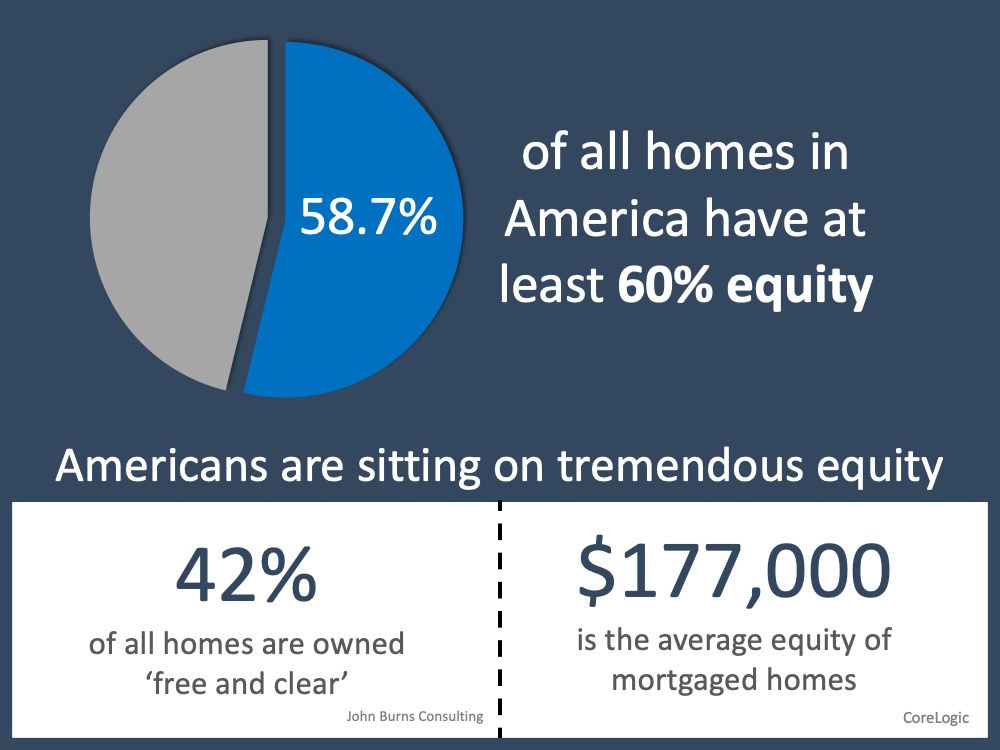
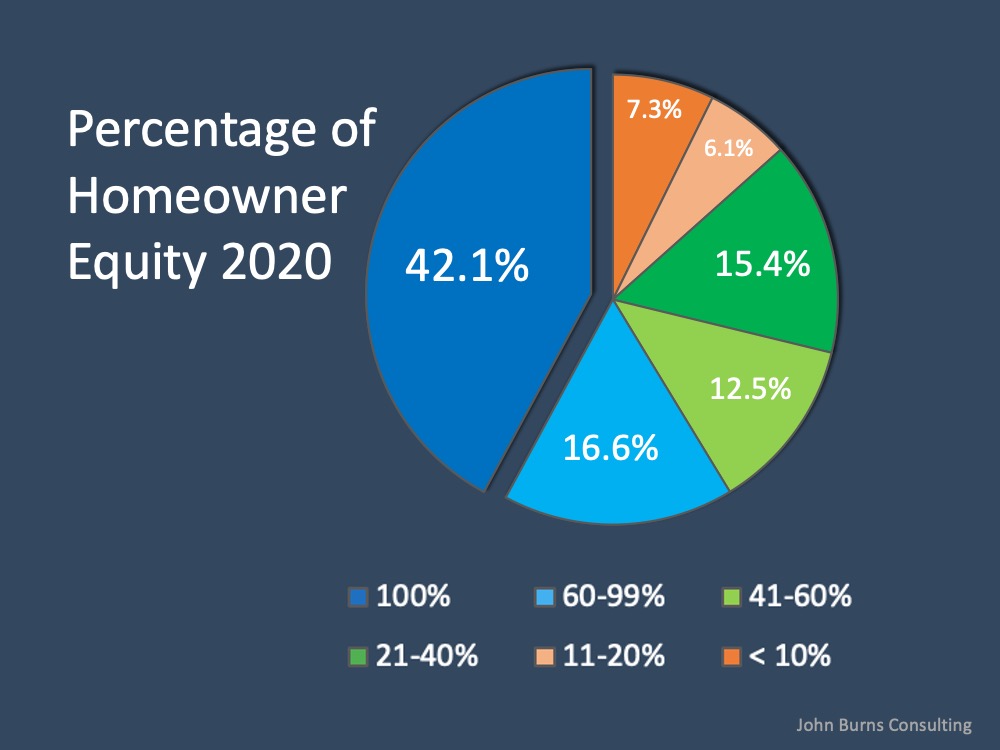
Given how we have seen more unemployment claims than ever before over the past several weeks, fear is spreading widely. Some good news, however, shows that more than 4 million initial unemployment filers have likely already found a new job, especially as industries such as health care, food and grocery stores, retail, delivery, and more increase their employment opportunities. Breaking down what unemployment means for homeownership, and understanding the significant equity Americans hold today, are important parts of seeing the picture clearly when sorting through this uncertainty. One of the biggest questions right now is whether this historic unemployment rate will initiate a new surge of foreclosures in the market. It’s a very real fear. Despite the staggering number of claims, there are actually many reasons why we won’t see a significant number of foreclosures like we did during the housing crash twelve years ago. The amount of equity homeowners have today is a leading differentiator in the current market. Today, according to John Burns Consulting58.7% of homes in the U.S. have at least 60% equity. That number is drastically different than it was in 2008 when the housing bubble burst. The last recession was painful, and when prices dipped, many found themselves owing more on their mortgage than what their homes were worth. Homeowners simply walked away at that point. Now, 42.1% of all homes in this country are mortgage-free, meaning they’re owned free and clear. Those homes are not at risk for foreclosure (see graph below):Why Home Equity is a Bright Spark in the Housing Market | MyKCMIn addition, CoreLogic notes the average equity mortgaged homes have today is $177,000. That’s a significant amount that homeowners won’t be stepping away from, even in today’s economy (see chart below):Why Home Equity is a Bright Spark in the Housing Market | MyKCMIn essence, the amount of equity homeowners have today positions them to be in a much better place than they were in 2008.

Bottom Line 

The fear and uncertainty we feel right now are very real, and this is not going to be easy. We can, however, see strength in our current market through homeowner equity that has not been there in the past. That may be a bright spark to help us make it through.
May 5, 2020

Homeownership High

U.S. Homeownership Rate Rises to Highest Point in 8 Years | MyKCM
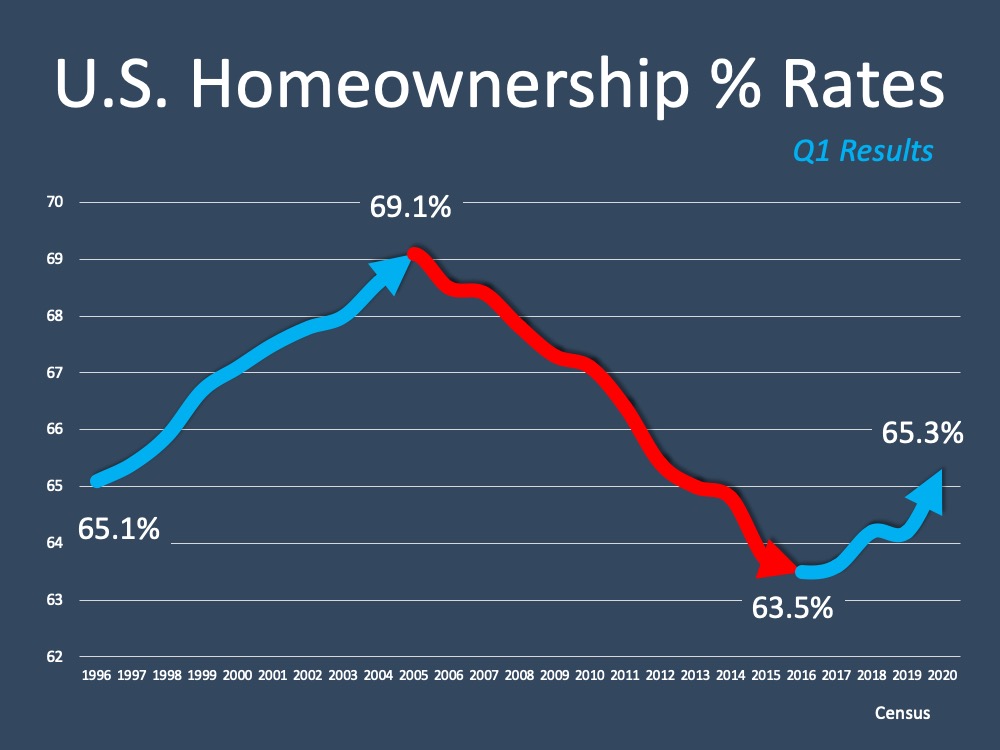
For nearly two months, most of us have been following strict stay-at-home orders from our state and local governments. It is a whole new way of life that has put our daily lives on pause. On the other hand, many of us have also found a sense of comfort by slowing down and spending time at home, highlighting the feeling of security that comes with having a much-needed safe place for our families to live. The latest results of the Housing Vacancy Survey (HVS) provided by the U.S. Census Bureau shows how Americans place immense value in homeownership, and it is continuing to grow in the United States. The results indicate that the homeownership rate increased to 65.3% for the first quarter of 2020, a number that has been rising since 2016 and is the highest we’ve seen in eight years (see graph below):U.S. Homeownership Rate Rises to Highest Point in 8 Years | MyKCMWhy is the rate increasing? The National Association of Home Builders (NAHB) explained:
“Strong owner household formation with around 2.7 million homeowners added in the first quarter has driven up the homeownership rate, especially under the decreasing mortgage interest rates and strong new home sales and existing home sales in the first two months before the COVID-19 pandemic hit the economy.”
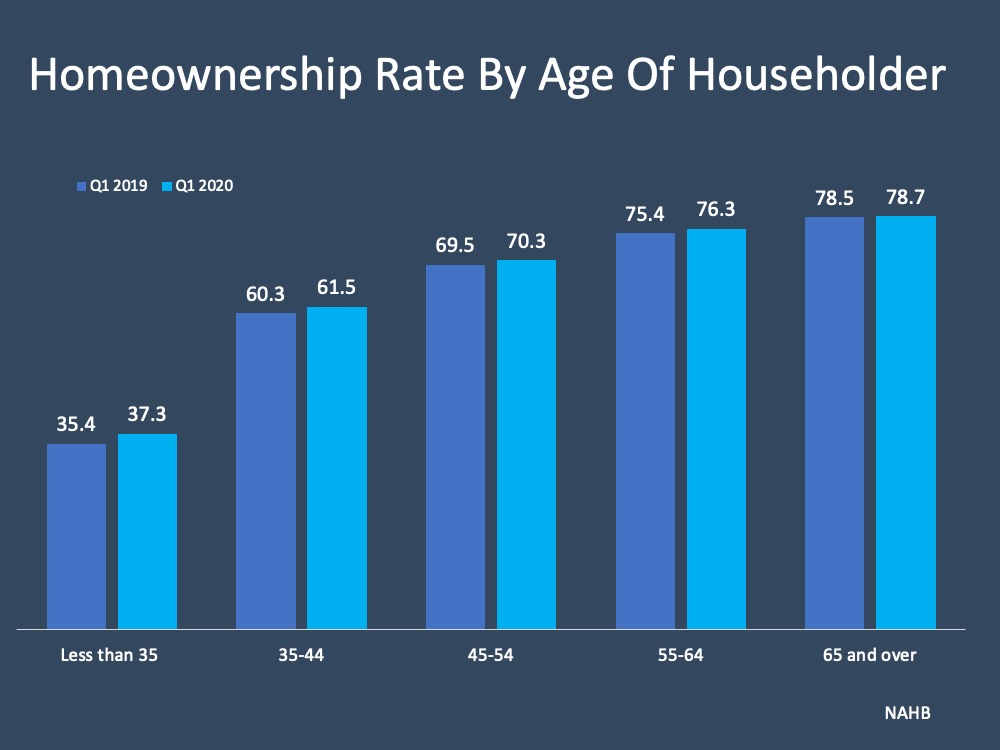
The NAHB also emphasizes the year-over-year increase in each generational group:
“The homeownership rates among all age groups increased in the first quarter 2020. Households under 35, mostly first-time homebuyers, registered the largest gains, with the homeownership rate up 1.9 percentage points from a year ago. Households ages 35-44 experienced a 1.2 percentage points gain, followed by the 55-64 age group (a 0.9 percentage point increase), the 45-54 age group (a 0.8 percentage point gain), and the 65+ group age (up by 0.2 percentage point).” (See chart below):
U.S. Homeownership Rate Rises to Highest Point in 8 Years | MyKCMHomeownership is an important part of the American dream, especially in moments like this when many are feeling incredibly grateful for the home they have to shelter in place with their families. COVID-19 may be slowing our lives down, but it is showing us the emotional value of homeownership too.

Bottom Line

If you’re considering buying a home this year, let’s connect to set a plan that will help you get one step closer to achieving your dream.
April 30, 2020

Buy Now?


Buying a Home Right Now: Easy? No. Smart? Yes. | MyKCM

Through all the volatility in the economy right now, some have put their search for a home on hold, yet others have not. According to ShowingTime, the real estate industry's leading showing management technology provider, buyers have started to reappear over the last several weeks. In the latest report, they revealed:

“The March ShowingTime Showing Index® recorded the first nationwide drop in showing traffic in eight months as communities responded to COVID-19. Early April data show signs of an upswing, however.”

Why would people be setting appointments to look at prospective homes when the process of purchasing a home has become more difficult with shelter-in-place orders throughout the country? 

Here are three reasons for this uptick in activity:

1. Some people need to move. Whether because of a death in the family, a new birth, divorce, financial hardship, or a job transfer, some families need to make a move as quickly as possible.

2. Real estate agents across the country have become very innovative, utilizing technology that allows purchasers to virtually:

  • View homes
  • Meet with mortgage professionals
  • Consult with their agent throughout the process

All of this can happen within the required safety protocols, so real estate professionals are continuing to help families make important moves.

3. Buyers understand that mortgage rates are a key component when determining their monthly mortgage payments. Mortgage interest rates are very close to all-time lows and afford today’s purchaser the opportunity to save tens of thousands of dollars over the lifetime of the loan.

Looking closely at the third reason, we can see that there’s a big difference between purchasing a house last December and purchasing one now (see chart below):Buying a Home Right Now: Easy? No. Smart? Yes. | MyKCM

Bottom Line

Many families have decided not to postpone their plans to purchase a home, even in these difficult times. If you need to make a move, let’s connect today so you have a trusted advisor to safely and professionally guide you through the process.

April 28, 2020

Rise to the Top of the Pool by Selling Your House Today


Rise to the Top of the Pool by Selling Your House Today | MyKCM

With the release of the latest Economic Pulse Flash Survey from the National Association of Realtors (NAR), results show that people selling their houses today are holding strong on price. According to the most recent data, 74% of real estate agents noted that sellers are not dropping listing prices to attract more buyers.

Lawrence Yun, Chief Economist at NAR, noted: 

“The housing market faced an inventory shortage before the pandemic. Given that there are even fewer new listings during the pandemic, home sellers are taking a calm approach and appear unwilling to lower prices to attract buyers during the temporary disruptions to the economy.”

This inventory shortage, which spread widely throughout the housing market going into today’s economic slowdown, created an environment where there were not enough homes for sale for those who wanted to buy them. With that backdrop setting the stage, Yun also notes:

“With the current quarantine recommendations in place, fewer sellers are listing homes, which will limit buyer choices.”

So, with buyer choices already limited going into this season, and more sellers removing listings today, if you’ve been thinking about listing your house, it’s a great time to do so. Many others in your neighborhood may be waiting to make a move or removing their listings, so staying on the market – or jumping into it – could work to your advantage.

Buyers today are serious ones, and with prices holding steady in this low-inventory market, you can feel confident about selling today. Embracing the process virtually, where available, could help your house hit the top of an eager buyer’s list. While your neighbors miss out on this opportunistic time, you don’t have to.

Bottom Line

If buyer choices are limited in your neighborhood, selling now may help your listing rise to the top of the pool. Let’s connect today to make sure you have the expert help you need to succeed in the selling process.

April 23, 2020

Selling Your Home Virtually

Keys to Selling Your House Virtually

Keys to Selling Your House
Virtually | MyKCM

In a recent survey by realtor.com, people thinking about selling their homes indicated they're generally willing to allow their agent and some potential buyers inside if done under the right conditions. They're less comfortable, however, hosting an open house. This is understandable, given the health concerns associated with social contact these days. The question is, if you need to sell your house now, what virtual practices should you use to make sure you, your family, and potential buyers stay safe in the process?

In today's rapidly changing market, it's more important than ever to make sure you have a digital game plan and an effective online marketing strategy when selling your house. One of the ways your agent can help with this is to make sure your listing photos and virtual tours stand out from the crowd, truly giving buyers a detailed and thorough view of your home.

So, if you're ready to move forward, virtual practices may help you win big when you're ready to sell. While abiding by state and local regulations is a top priority, a real estate agent can help make your sale happen. Agents know exactly what today's buyers need, and how to put the necessary digital steps in place. For example, according to the same survey, when asked to select what technology would be most helpful when deciding on a new home, here's what today's homebuyers said, in order of preference:

  • Virtual tour of the home
  • Accurate and detailed listing information
  • Detailed neighborhood information
  • High-quality listing photos
  • Agent-led video chat

After leveraging technology, if you have serious buyers who still want to see your house in person, keep in mind that according to the National Association of Realtors (NAR), there are ways to proceed safely. Here are a few of the guidelines, understanding that the top priority should always be to obey state and local restrictions first:

  • Limit in-person activity
  • Require guests to wash their hands or use an alcohol-based sanitizer
  • Remove shoes or cover with booties
  • Follow CDC guidance on social distancing and wearing face coverings

Getting comfortable with your agent – a true trusted advisor – taking these steps under the new safety standards might be your best plan. This is especially important if you're in a position where you need to sell your house sooner rather than later.

Nate Johnson, CMO at realtor.com ® notes:

“As real estate agents and consumers seek out ways to safely complete these transactions, we believe that technology will become an even more imperative part of how we search for, buy and sell homes moving forward.”

It sounds like some of these new practices might be here to stay.

Bottom Line

In a new era of life, things are shifting quickly, and virtual strategies for sellers may be a great option. Opening your doors up to digital approaches may be game-changing when it comes to selling your house. Let's connect so you have a trusted real estate professional to help you safely and effectively navigate through all that's new when it comes to making your next move.

Posted in Selling Your Home
April 21, 2020

Take Care of You

April 16, 2020

Buyers Want Lower Prices. Sellers Disagree.

Today’s Homebuyers Want Lower Prices. Sellers Disagree.

Today’s Homebuyers Want Lower Prices. Sellers Disagree. | MyKCM

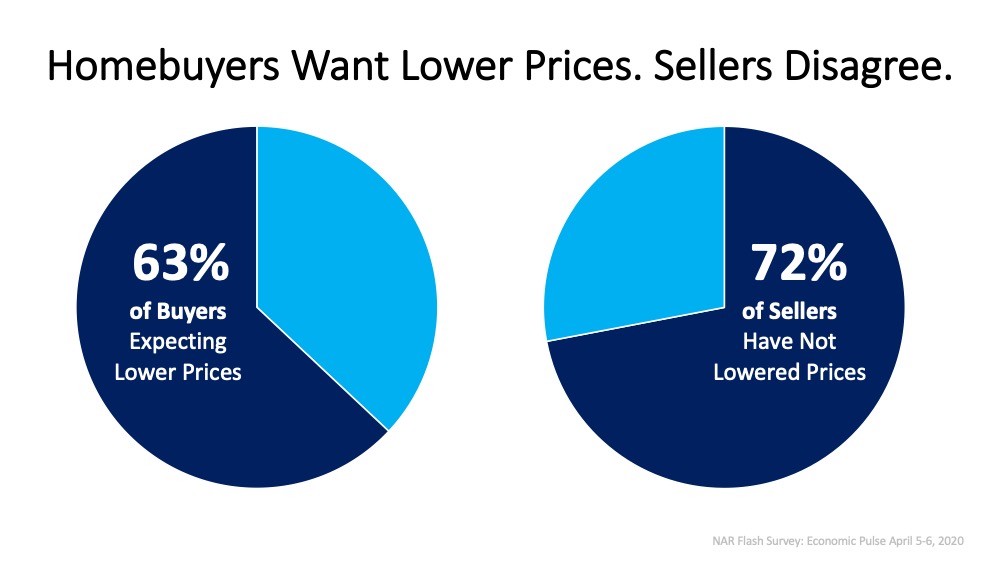
The uncertainty the world faces today due to the COVID-19 pandemic is causing so many things to change. The way we interact, the way we do business, even the way we buy and sell real estate is changing. This is a moment in time that’s even sparking some buyers to search for a better deal on a home. Sellers, however, aren’t offering a discount these days; they’re holding steady on price.

According to the most recent NAR Flash Survey (a survey of real estate agents from across the country), agents were asked the following two questions:

1. “Have any of your sellers recently reduced their price to attract buyers?”

Their answer: 72% said their sellers have not lowered prices to attract buyers during this health crisis. 

2. “Are home buyers expecting lower prices now?”

Their answer: 63% of agents said their buyers were looking for a price reduction of at least 5%.Today’s Homebuyers Want Lower Prices. Sellers Disagree. | MyKCM

What We Do Know  

In today’s market, with everything changing and ongoing questions around when the economy will bounce back, it’s interesting to note that some buyers see this time as an opportunity to win big in the housing market. On the other hand, sellers are much more confident that they will not need to reduce their prices in order to sell their homes. Clearly, there are two different perspectives at play.

Bottom Line

If you’re a buyer in today’s market, you might not see many sellers lowering their prices. If you’re a seller and don’t want to lower your price, you’re not alone. If you have questions on how to price your home, let’s connect today to discuss your real estate needs and next steps.

April 14, 2020

Forgiveness? Forbearance? Know the Difference.

Forgiveness or Forbearance? What You Need to Know.
Know the different mortgage relief options so you can make the best choice.
Forbearance 
This is the plan everyone is talking about since the passage of the CARES Act. It’s an agreement with your lender to reduce or delay regular payments for a set time. When the forbearance period ends, the postponed payments will be due all at once.

Modification 
This is a legal process that alters the terms of your loan. For instance, a modification could lower your monthly payments by lengthening your loan term.

Deferment
This is a plan that allows you to postpone your payments for a set time then pay them at the end of your regular loan term. “Deferments” and “forbearances” are often used interchangeably, but they are different. A deferment is more beneficial for many because it eliminates the need to make up multiple payments at the end of a short postponement period. Deferments are not available from all servicers.

Payment Assistance Program
This is an arrangement that allows you to make up your postponed payments at the end of a forbearance period by spreading the cost over a period of time. Payment Assistance Programs are not available from all servicers.

Cash-Out Refi or Home Equity Line of Credit (HELOC)
If you still have enough income to qualify, accessing the equity in your home by refinancing or obtaining a secured credit line may be a good option for lowering your payments, consolidating other debts, and/or creating a cash cushion. A refi will be especially beneficial if current rates are lower than those on your existing financing.


To set up the other options listed here, please reach out using the contact information on your monthly loan statement.
 Document all calls and agreements, then check your monthly statements and credit reports to asset changes are reported correctly.
I hope this helps you understand the available options. If you have any questions, please reach out or If you want to discuss your options for a refinance or HELOC we can put you in touch with a highly qualified mortgage professional to help you decide what is best for you during these unusual and difficult times.
This info brought to you by First County Mortgage- an affiliate of C21NM.
 
Posted in Real Estate News