


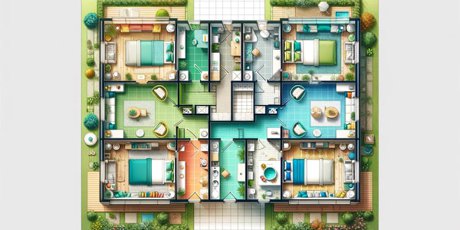
What is a multi-generational home? So, picture this - it's a living situation where different generations of the same family, think grandparents, parents, and kids all live together. It's not just for bonding; they're also reaping financial perks.
More and more folks are gravitating towards this living arrangement because it's not just about the practical side of things—it fosters a close-knit family vibe too.
"From 1971 to 2021, the number of people living in multigenerational households quadrupled, while the number in other types of living situations is less than double what it was. The share of the U.S. population in multigenerational homes has more than doubled, from 7% in 1971 to 18% in 2021." www.pewresearch.org/social-trends/2022/03/24/the-demographics-of-multigenerational-households
Key Takeaways
- A multigenerational home includes more than two adult generations under one roof or grandparents with grandchildren, offering a mix of private and shared spaces to balance the independence of each group and family interaction.
- In the grand scheme of things, multigenerational homes are not merely about creating lasting memories and solidifying familial ties; it's a financially savvy move as well. By combining their assets, families can mitigate poverty risks, share financial responsibilities, and achieve greater monetary steadiness - a win for everyone involved!
- Factors like cultural trends, money woes, and even the COVID-19 pandemic have fueled an uptick in homes where multiple generations live together. But for this setup to work smoothly, there's a need for clear rules everyone follows. It also calls for open talks about everything from privacy to chores. Plus, let's not forget that it is crucial in this living arrangement that each person can grow as an individual.
Defining the Multigenerational Household
A multigenerational home is not just a house filled with people. It is a living arrangement where more than two adult generations coexist under the same roof, or grandparents live with grandchildren under the age of 25.
In this setup, you could find parents bunking up with their grown-up kids or maybe even a grandparent sharing the living space with their adult kid and their child's child. This creates a unique environment where diverse generations interact, and learn from each other, giving life to new dynamics within the household.
Another type of multigenerational home is the ‘skipped generation’ household. These households consist of grandparents and their grandchildren without the generation in between. While this arrangement makes up only about 5% of multigenerational households, it exemplifies the diversity within this living concept.
Concluding Thoughts
So, let's wrap this up. Multi-generational homes are a growing trend. They are not just houses; they're the backbone of unity and intergenerational harmony. Each generation within these households learns resilience as they ride out economic shifts, aging, and societal changes with grace.
By striking a balance between personal space needs and yearning for family closeness, these homes have become life-enhancing blueprints across all age groups. Moreover, there's been an uptick in multi-gen living recently—and it isn't about sharing bills or making ends meet—it echoes our cultural shift towards treasuring connectedness, and shared experiences—a mutual support system if you will.
As we stride into future uncertainty together yet separate (thank you COVID-19), remember: multi-gen abodes offer us lessons on cohabitation that extend beyond physical proximity—they bring purposeful joy to each dweller by redefining home as a haven for all ages.
:format(webp):quality(80)/u.realgeeks.media/donnakelly/Facebook.jpg)
:format(webp):quality(80)/u.realgeeks.media/donnakelly/Instagram.jpg)